Is the Change Worth It? Moving to Better Volunteer Software
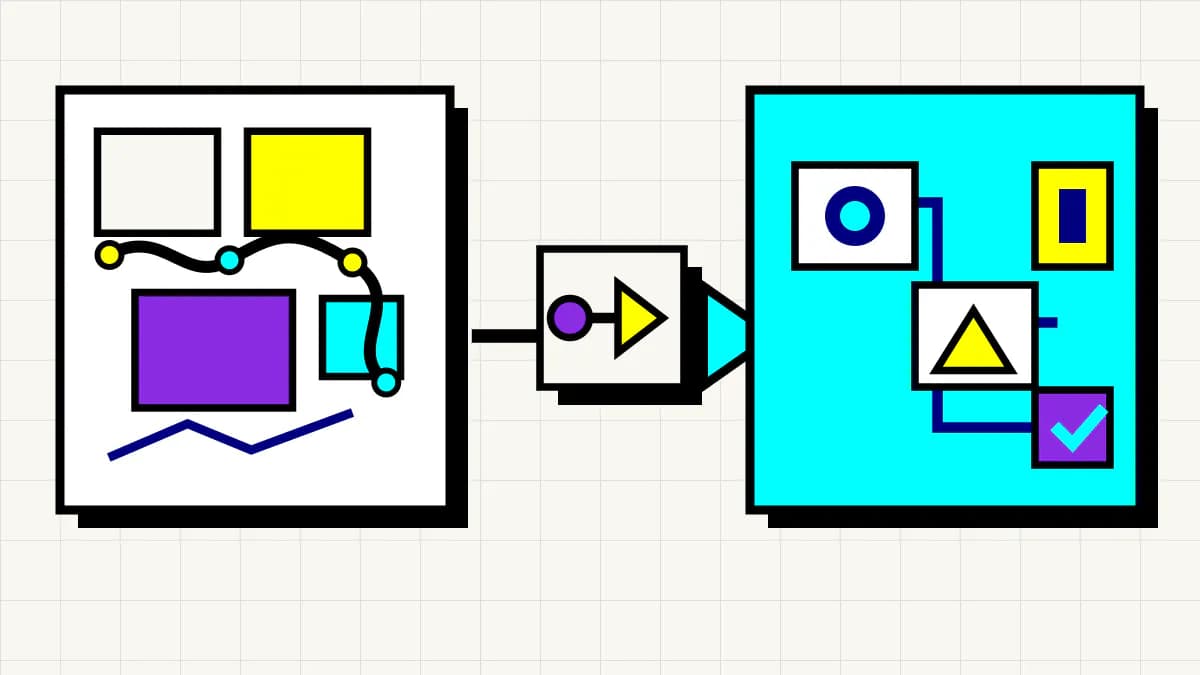
Most teams do not resist change because they love bad software.
They resist it because the current system is woven into the way the organization remembers things, makes exceptions, trains new people, and gets through a difficult Tuesday. A spreadsheet can be awkward and still be familiar. A group chat can be unreliable and still be where everyone knows to look. The person who has been doing the work for years may be the only person who knows which workaround keeps the whole process moving.
That is the real question behind every software decision: is the change worth it?
The question is rational. Moving to a new volunteer management system costs attention before it saves any. Somebody has to explain the reason for the change, map the current process, answer the inevitable “what happens now?” questions, and stand beside the first event when reality refuses to follow the plan.
A recent discussion in r/nonprofit makes the stakes visible. The writer describes a busy food bank serving around 8,000 people a week, with roughly 25 volunteers needed each day and more than 100 people cycling through the operation. They also describe new volunteers being handed to an active service worker for orientation while a crowded line needed attention. Those details are the writer’s account, not a benchmark or a customer story. The important idea is the collision: coordination work does not disappear because everyone is already busy doing the mission.
Changing software has the same collision. The organization is supposed to improve the system while still running the work the system supports.
The incumbent is more than software
When a team says, “We can keep using the spreadsheet,” it may not be defending the spreadsheet. It may be defending the knowledge around it.
The current process contains people’s memory. It contains the unofficial order of operations, the names of reliable backups, the exceptions that never made it into documentation, and the shortcuts that keep a volunteer from getting lost. It may also contain years of emotional investment. People built that process because they cared enough to make it work.
That is why a new platform can feel like a judgment on the people who carried the old one. If the migration is framed as “we are replacing your messy way of working,” the team hears that its effort was the problem. If it is framed as “we are giving the work a better home,” the conversation can start in a more honest place.
The old system also has a low switching cost in the moment. Everyone already knows its weaknesses. They know when to check a second sheet, who to text, and which field not to trust. A new system asks for a different kind of confidence: trust that the visible path is the right path, even before the team has accumulated its own history with it.
That trust cannot be installed by a feature list.
The hidden cost of “is the change worth it?”
The cost of change is not just data migration or a subscription. It is the temporary period when the organization is fluent in neither the old process nor the new one.
| What a team says | The question underneath |
|---|---|
| “The spreadsheet still works.” | Will the new system remove enough reconstruction to justify learning it? |
| “Our volunteers will not learn another tool.” | Will the new path be simpler than the workaround they use now? |
| “We do not have time to migrate.” | Who is going to carry the first-event work, and will they have real support? |
| “Everyone already knows the process.” | What happens when the person who knows it is away? |
These are not objections to overcome with pressure. They are design requirements.
If the first live event creates more questions than it removes, the team will return to the old system. Not because the new software is necessarily bad, but because the organization paid the adoption cost without receiving a visible operational return.
The greater good is not persuasive when it remains abstract. “This will help the organization scale” has to become something a coordinator can feel during the next shift: fewer duplicate lookups, a clearer assignment, an easier arrival, a faster answer when something changes.
Software is not the solution by itself
Software is a means. The solution is the supported outcome around it.
A volunteer management system can store roles and shifts. A useful solution makes the role understandable to the person choosing it, keeps the confirmed assignment connected to the event, gives the organizer a current record, and ties attendance to the work that was actually assigned.
That difference matters because the hardest part of an event is rarely the existence of a field. It is the handoff between people:
- Who is expected to arrive?
- What did they agree to do?
- Who can answer when the role is unclear?
- What should happen when somebody is late, changes plans, or needs help?
- How will the team know what actually happened afterward?
A system should make those questions easier to answer. It should not make the organization pretend that human judgment has been automated.
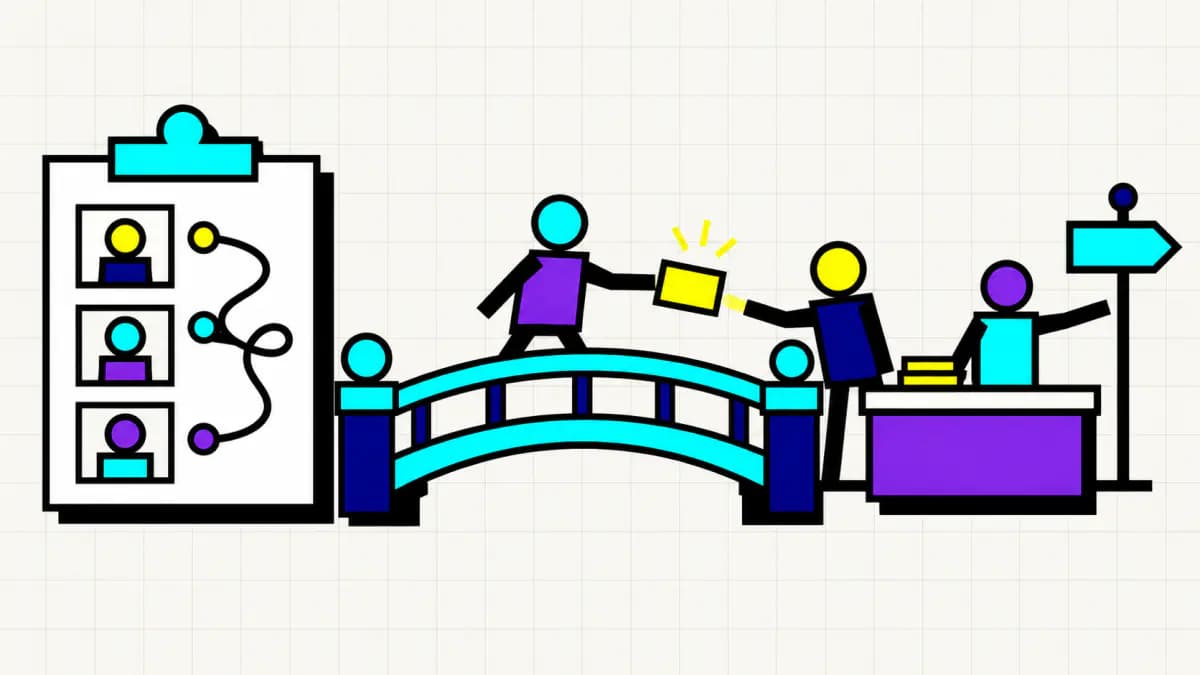
A successful change connects the team’s existing knowledge to a clearer event flow. The bridge is support, not another layer of software.
A partner is part of the product
The phrase “implementation partner” can sound like consulting language for a large enterprise. For a small nonprofit or an event team, it is much more concrete: who will stay close enough to help when the plan meets the room?
A real partner does four things well.
They listen before they prescribe
The first conversation should make space for the current process, including the awkward pieces. The goal is not to celebrate every workaround. It is to understand what the workaround is protecting: a safety check, a person’s limited time, a volunteer’s confidence, or a detail that the official process forgot.
They translate complexity into one usable path
Teams do not need a tour of every capability. They need to know what changes for the next event. The best product work is often compression: take a complicated set of records and decisions, then expose only the next action each person needs to take.
They support the first real use
Training in a quiet meeting is not the same as an arrival window with a line at the door. A partner should help the team choose a sensible first event, prepare the people who will use the workflow, and remain available when a real volunteer asks a question nobody thought to write down.
They close the loop quickly
Fast shipping is useful only when it is connected to the work. A product team should be able to hear a repeated point of friction, understand whether it is a product problem or a process decision, and make the next improvement quickly. Speed is not the number of features released. It is the distance between “this is getting in our way” and “the next event is easier.”
That is why the relationship matters as much as the software. A partner helps the organization keep its promises while the system changes underneath them.
Make the change about the job, not the catalog
The safer way to evaluate a new system is to start with one operational job and follow it all the way through.
For volunteer events, that might mean tracing one person from choosing a role, to receiving a confirmed assignment, to arriving at the right place, to recording attendance. The system earns its place when the path is clearer for the volunteer and the organizer—and when the team spends less time reconstructing what happened from separate tools.
This is also where a focused product can be more useful than a large one. Proximatic is not trying to become a nonprofit’s donor database, HR system, learning platform, or general-purpose form builder. The event-level job is enough: public signup, roles and shifts, a confirmed roster, and day-of attendance in one connected flow.
The point is not that every organization should use the same system. The point is that a system should be judged by the work it removes, the confidence it creates, and the support that helps people adopt it.
The decision should include the first successful event
Before approving a switch, ask questions that include the people who will carry the change:
- What will be visibly easier at the first live event? If the answer depends on a future configuration project, the benefit is not ready yet.
- Who owns the transition? Give the work a name and protected time. Do not hide it inside someone’s already-full service role.
- Which parts of the process should remain human? Welcome, supervision, judgment, and care are not migration failures. They are the work.
- What will the partner do when the process meets an exception? A help center is useful. A responsive partner is different.
- What is the cost of staying? Count repeated lookups, duplicate entry, unclear ownership, and the people who have to keep the whole thing in their heads.
The change is worth it when the organization can answer those questions honestly. Not when the demo looked impressive. Not when the feature list was longer. When the first event gives the people doing the work more clarity and less unnecessary effort.
That is the kind of software relationship we want to build at Proximatic. The product should simplify a complex event without hiding the humans who make it work. The partnership should continue until the new path is not merely installed, but useful.
If the work is volunteer signup, event roles and shifts, a confirmed roster, and attendance, walk through the Proximatic event flow with the person who runs your next event. Then ask the question that matters: what would make the change worth it for them?
For the other half of this conversation, see why AI cannot do in-person volunteering.
Source note: The opening example paraphrases the July 16, 2026 r/nonprofit discussion “Are we overdue for a volunteer coordinator?”. The figures and experiences belong to the original poster; they are included as a specific illustration of coordination pressure, not as independently verified sector-wide data.