The Mental Tax: How Thoughtful UX Solves the Scaling Ceiling
Every organization reaching for "scale" eventually hits an invisible ceiling. It isn’t usually a lack of capital or a lack of heart that stops the momentum—it’s a lack of mental bandwidth. A deep examination of modern digital workflows reveals a fundamental truth: the core friction in organizational growth isn't a technical bug to be patched. It is a design philosophy that systematically ignores Cognitive Load.
The era of agent-led coding is witnessing a recursive explosion of features. It is undeniably impressive to watch entire platforms appear seemingly out of nothing with a single prompt, but speed is not the ultimate answer—it is simply a force multiplier for existing tools. In a crowded landscape where software can be generated in seconds, features have become commodities. The true competitive moat is no longer just the code itself, but the frictionless experience it delivers. The core truth of software success is that thoughtful UX is the value itself. For a user, the "product" isn't just a database; it’s a profound feeling of not being overwhelmed.
The High Cost of Micro-Friction
Friction doesn't usually arrive as one giant roadblock; it arrives as a thousand tiny pinpricks. This is Micro-Friction. It’s every extra click, every redundant form field, and every little moment where a user stops and says, "Wait, huh?" Individually, these are minor interruptions. Collectively, they represent a failure to protect the user's momentum. A best-in-class product understands that its primary job is to eliminate this "Mental Tax," preserving the user's focus and energy for the work that actually matters.
This highlights the core imperative of Invisible Design. The most effective technology doesn't demand attention; it redirects it back to the mission. By eliminating decision fatigue and mechanical complexity, design enables a fundamental shift in organizational focus. The tool moves from being a "system" that must be managed to a silent engine that powers impact. Solving for a user's mental energy is not just building a platform; it is reclaiming the space where human connection happens.
Solving for the "Small Moments"
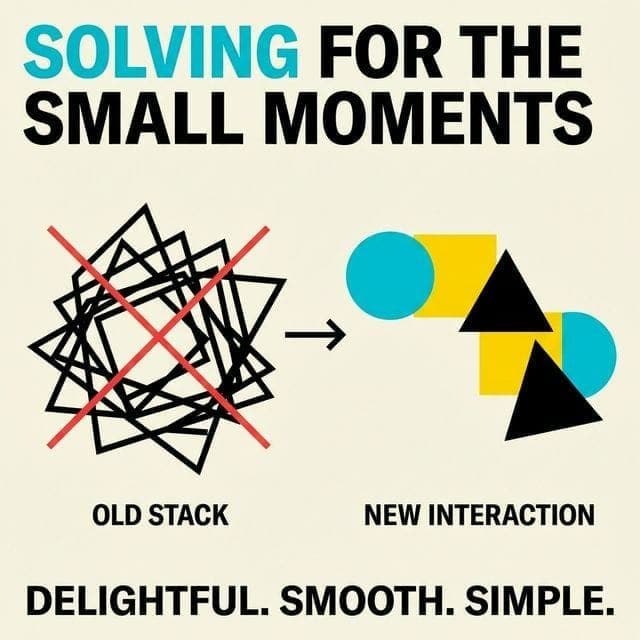
Deep user trust isn't built in high-level strategy meetings; it is built in the "Small Moments." It’s the instant feedback of a mobile-responsive check-in. It’s the clarity of a status indicator that updates in real-time. These thoughtful interactions accumulate until the user no longer has to think about the tool at all.
A best-in-class design philosophy is intentionally opinionated. By making smart decisions on behalf of the user, decision paralysis is reduced. In an era of "Legacy Bloat," many systems attempt to solve problems by adding more buttons and more tabs. Problems are solved by removing them.
The Complexity Paradox: Designing for Cohorts
In some cases, complexity is unavoidable. Higher-order tasks—like scheduling multidimensional shifts, orchestrating large-scale fundraising, or managing complex logistics—require functional depth. However, the cardinal error in software development is treating every user like a power user. True frictionless design stems from a granular understanding of who is interacting with the system at any given moment.
Not every user requires every feature. Success is defined by the ability to deliver tailored ease across widely varying cohorts. A "best-in-class" feature set recognizes that signing up for an event is an every-person task that must be cognitively weightless. Conversely, orchestrating that same event is a specialist task that requires precision and control. Making both easy for their respective users is the ultimate product goal. Both tasks are complicated, just in different ways: one must solve for the psychology of mass adoption, while the other must solve for the functional requirements of high-stakes management. Ignoring the "easy" conceptual task while over-indexing on functional complexity is a fatal design flaw.
Evaluating the Landscape: The Three Paths
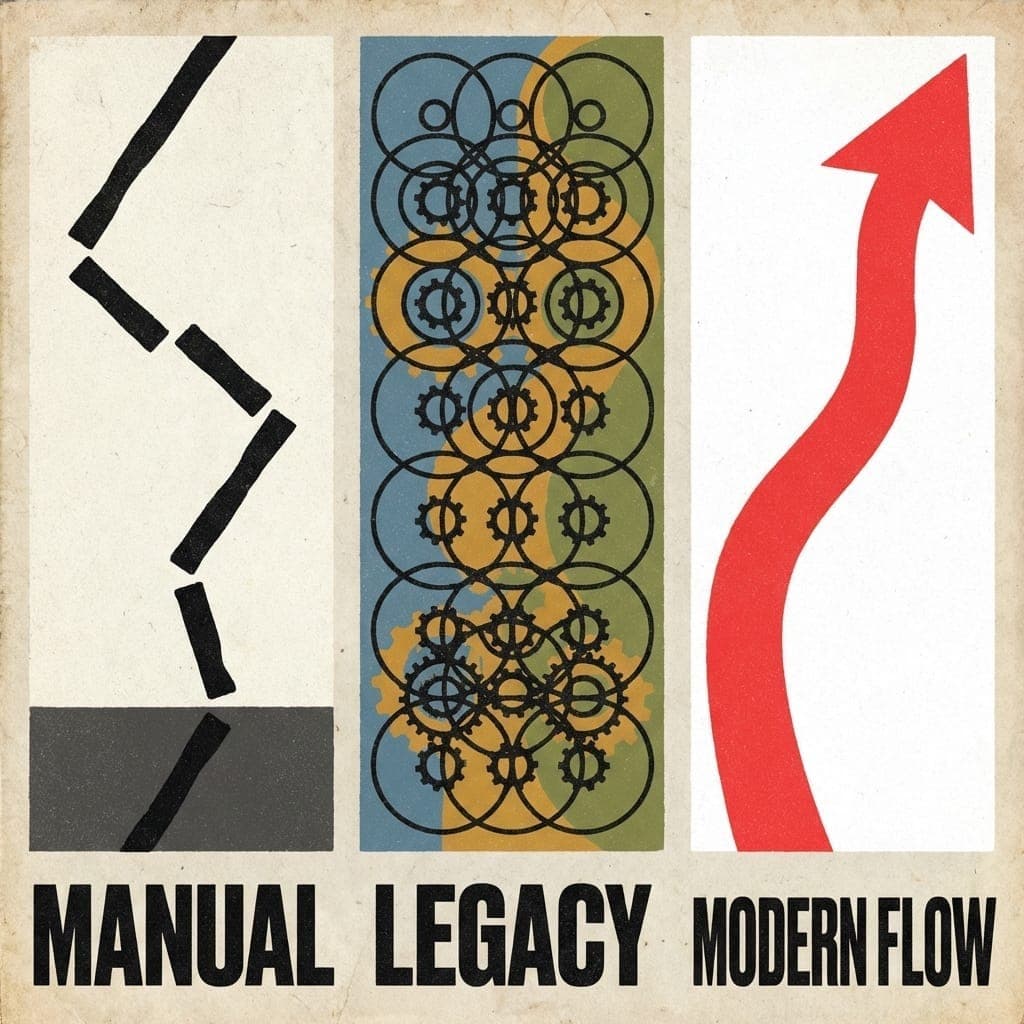
If an organization is currently facing this ceiling, there are likely three primary paths forward.
The first path is Manual Resilience (Spreadsheets). Depending on the process, manual coordination can start to let mission-critical details slip through the floorboards as the group grows. It forces leaders to trade their vision for data entry.
The second path is Enterprise Legacy. These are the "Legacy Giants"—platforms built for a desktop-first world. Their failure isn't a lack of features; they have thousands of them. Their failure is a lack of empathy for the modern user's workflow. They assume the user has the time to read a manual or attend a training session. They prioritize data hoarding over the "flow" of a real-world event.
The third path is the Flow-First Approach. Here, the goal is "Zero-Learning Curve" design. This approach leverages existing hardware and existing habits (like QR scanning) to make the technology invisible.
UX as a Force Multiplier
Invisible Automation is about more than convenience; it is about organizational health. From a development perspective, this is where the real scale happens. When the data stack is collapsed and the user's mental energy is prioritized, the space is created for the mission to actually thrive.
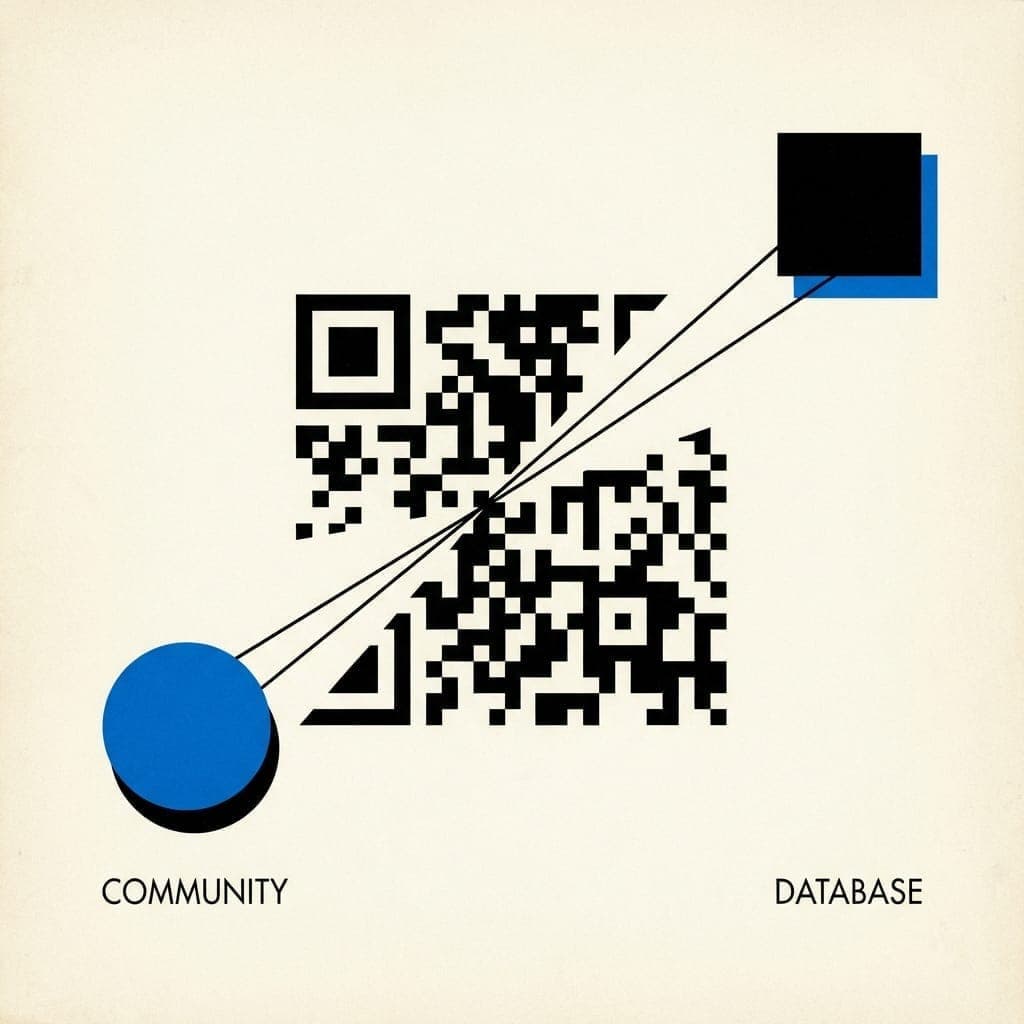
Framing the problem is the first step toward solving it. If an organization is struggling with growth, the solution isn't necessarily more features—it’s less friction. It's time to move from "managing the stack" to "growing the impact."
Take one small moment: can a volunteer tell whether their place is confirmed? Proximatic connects in-person event signups, volunteer roles and shifts, a confirmed roster, and day-of attendance. A connected, authenticated organizer agent can take one message with event notes, a people/email list, shifts, teams, availability, and supported rules, then prepare changes for review and approval. The web Create form starts with an event brief and people already prepared in the organization. AI-assisted planning includes one AI-organized event free each UTC calendar month, then costs $2 for each of up to eight more. Pro is $16/month and includes 30 AI-organized events per paid month. Walk through the event flow, then see AI rostering from both sides—the person signing up and the person running the event.